Over Three Decades of Exploration
Listen to Bilu Huang personally recount the starting point and original intention of his journey into aging research.
Starting Point and Original Intention
Reflections on aging began with the most primitive shock an eight-year-old child faced with death.
In a ravine not far from home, a pottery jar containing a skeleton and covered with moss made the young Bilu Huang truly realize the end of life for the first time—that he too would one day return to eternal darkness and silence.
It was this most instinctive fear of death that gave birth to his most determined ambition: to conquer aging. After graduating from elementary school, he began to spontaneously observe the aging phenomena in animals and plants, eagerly collecting all related knowledge, thus embarking on a journey of exploration that would last for more than thirty years.
From the Periphery to the Center: The Scientific Journey of an Independent Thinker
The path of Bilu Huang is fundamentally distinct from that of any modern scientist. Beginning his journey with only an elementary school education, he embarked on a decades-long, intensely focused intellectual exploration outside the confines of traditional academia.
Without a doctoral title or initial laboratory resources, his only credentials were his critical logical reasoning, extensive interdisciplinary reading, and an insatiable curiosity about the nature of life. He carved his own unique research path. He has never remained an outsider to the scientific community; instead, he has actively engaged in ongoing dialogue with global academia and the public through published papers, participation in academic discussions, and public lectures. It is precisely this unique path of independence and deep engagement that has allowed him to fuse first-principles thinking with feedback from the scientific community, enabling him to pinpoint the core of the complex phenomenon of aging.
The TRCS model is not merely another incremental academic paper; it is a paradigm shift. It is a systematic and complete theoretical framework constructed through logic by an independent mind. Its emergence affirms a powerful belief: profound thought springs from wisdom and perseverance, not from titles or status.
The establishment of the Bilu Huang Institute for Aging Research aims to place this crystallized wisdom, born of independent exploration, onto a more rigorous and collaborative platform of modern science, dedicated to translating theory into benefit for all humanity.
Key Milestones and Evolution
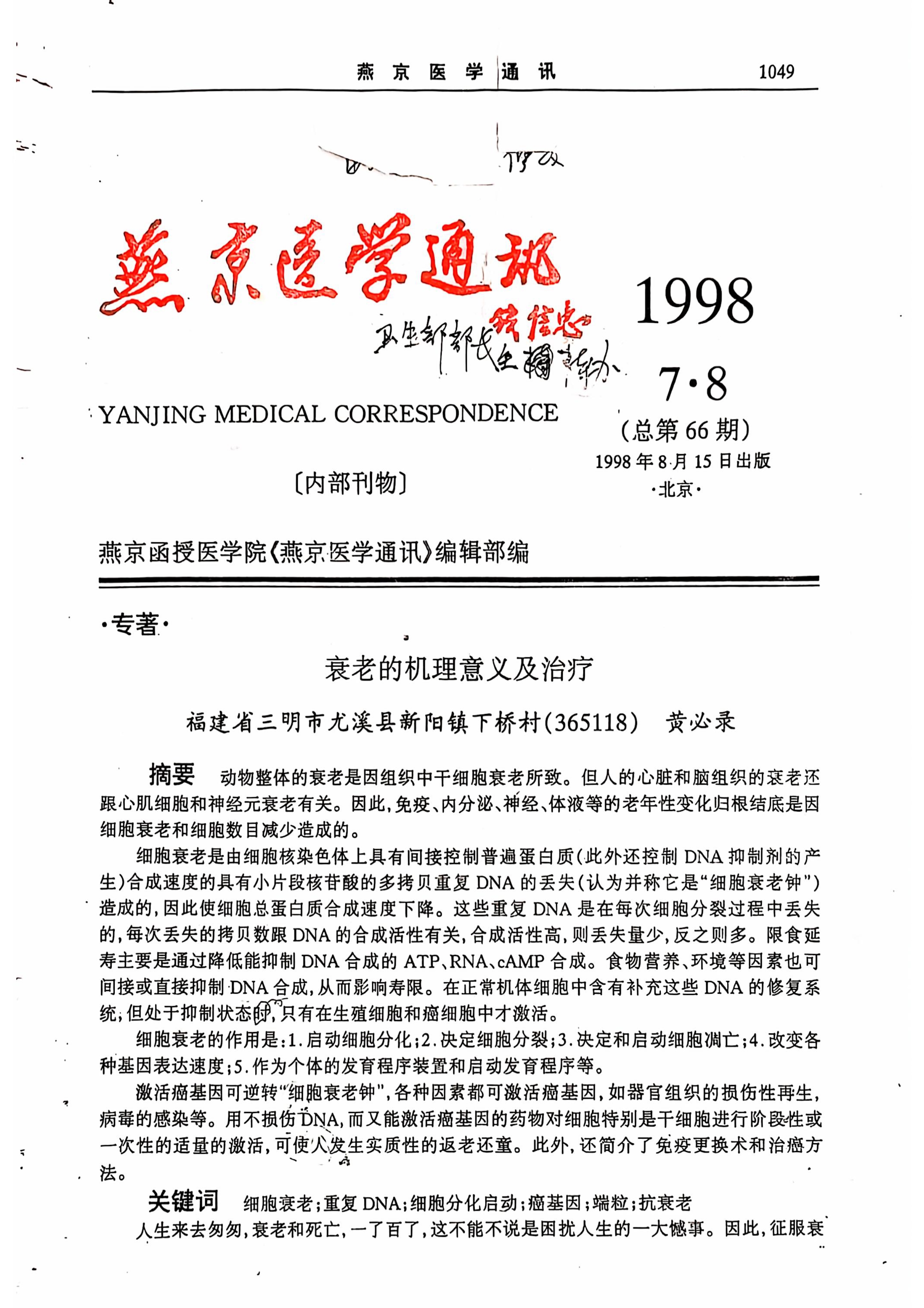
Published the monograph "Mechanism, Significance and Treatment of Aging" at Yanjing Medical Correspondence.
Core Insights: First proposed that "the aging of stem cells in tissues is the cause of individual aging"; inferred that telomeres are the "clockwork" of aging; pointed out that mtDNA mutations are the result of aging.
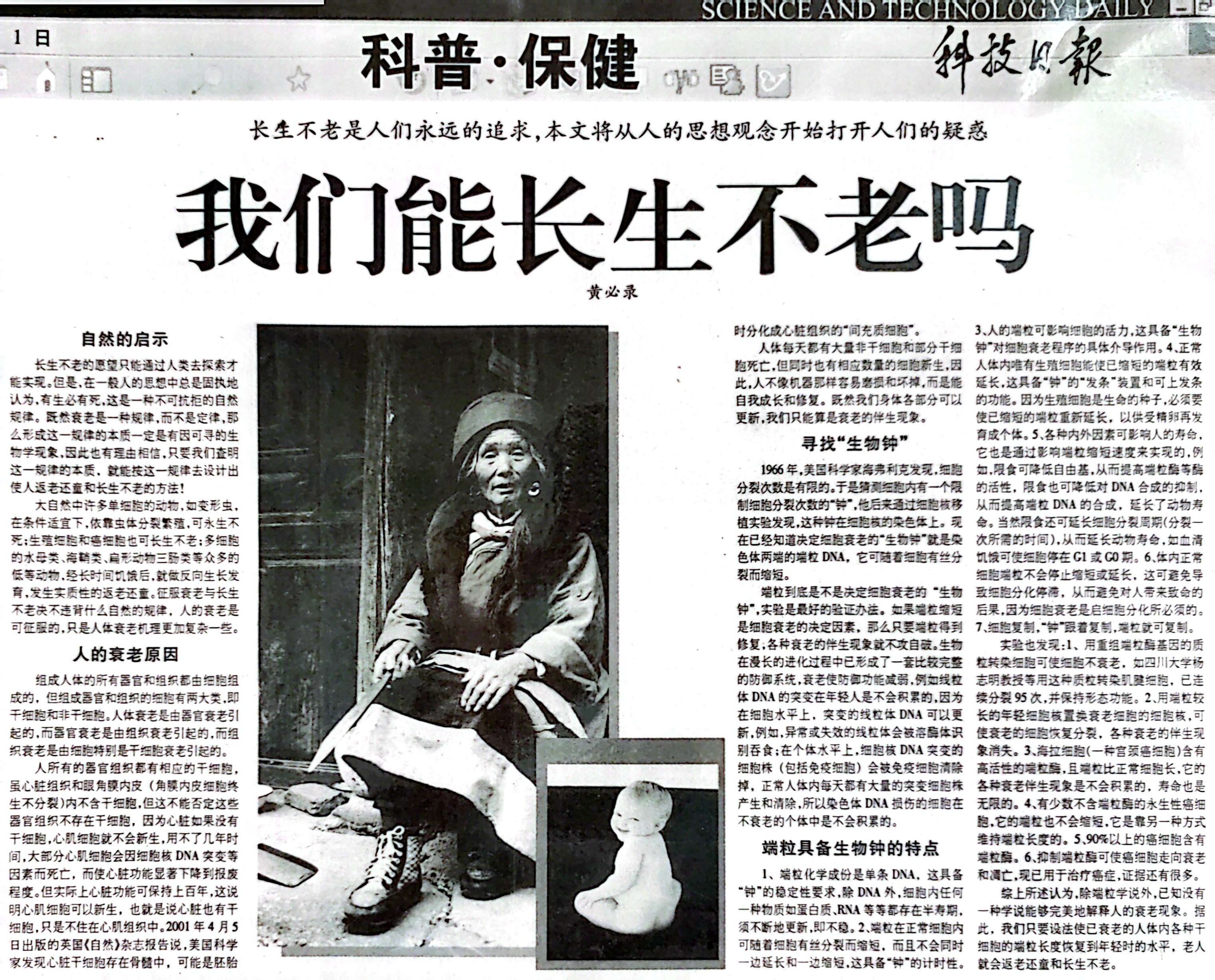
Published the article "Can We Live Forever?" in Science and Technology Daily.
Core Insights: Challenged the traditional concept that "aging is inevitable," demonstrated the feasibility of conquering aging; proposed the concept of "mitochondrial autophagy."
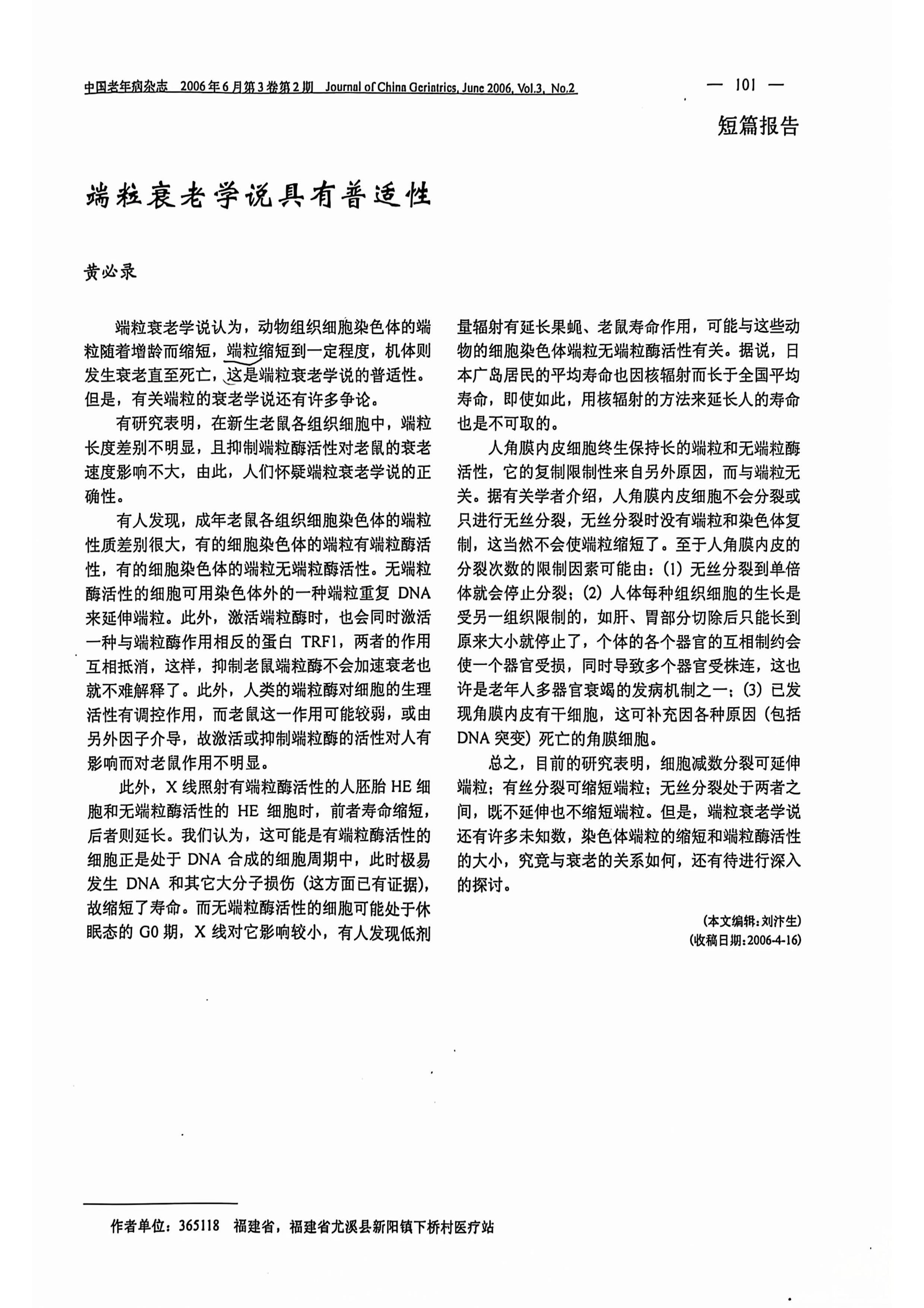
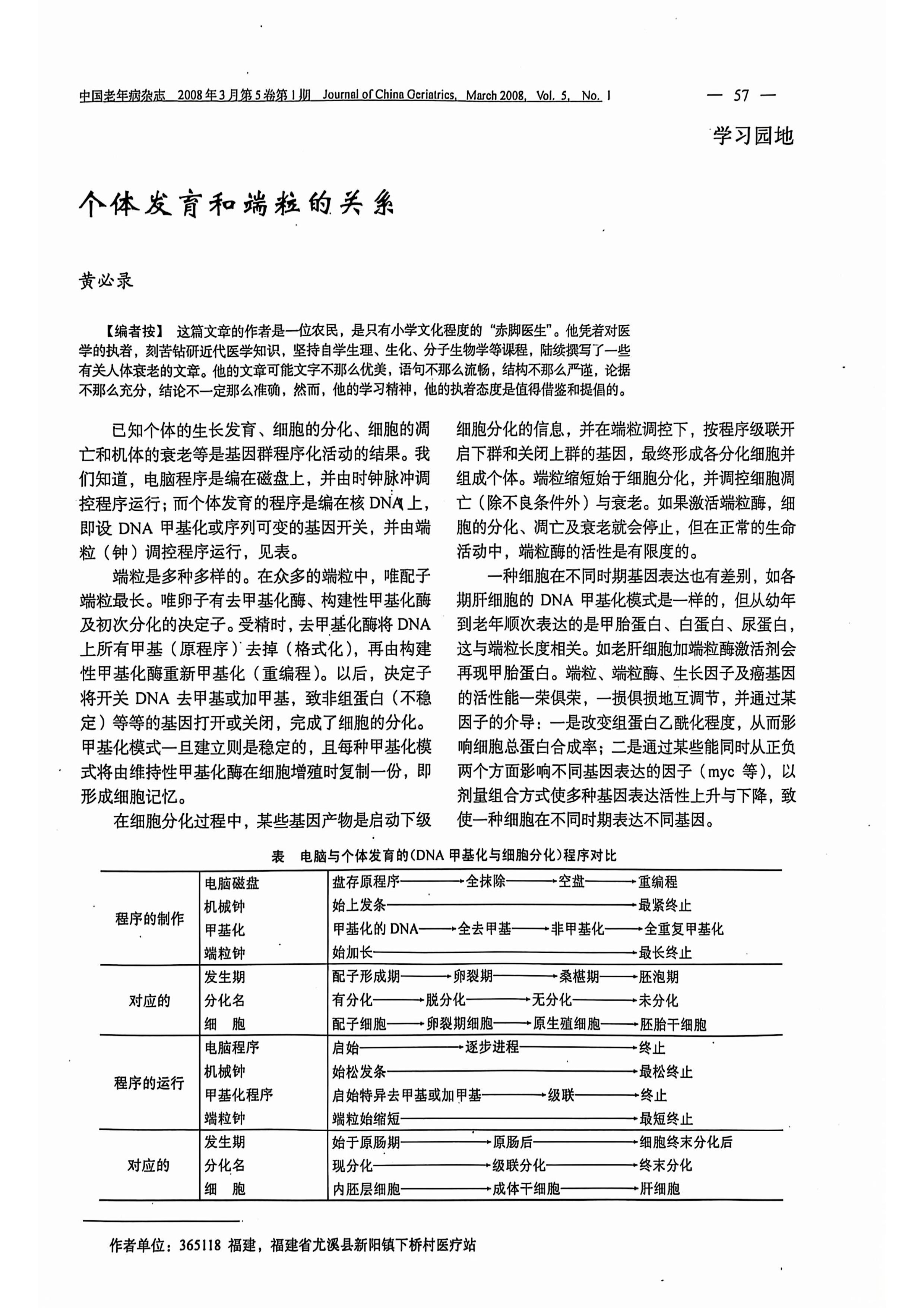
Successively published articles such as "The Telomere Aging Theory Has Universality," "The Relationship Between Individual Development and Telomeres," and "The Life Cycle Driving Theory of Aging."
These works further consolidated and expanded the theoretical framework of 1998, continuously improving the aging model centered on stem cells, telomeres, and programming theory.

Realizing that the aging of certain non-dividing cells is unrelated to telomeres, and combined with research from Professor Helen M. Blau at Stanford University, Bilu Huang inferred that there must be another set of "clocks" in the nucleus similar to telomeres.
Based on the persistent pursuit of "multi-copy tandem repeat DNA" since 1998, the target was eventually locked on ribosomal DNA (rDNA).
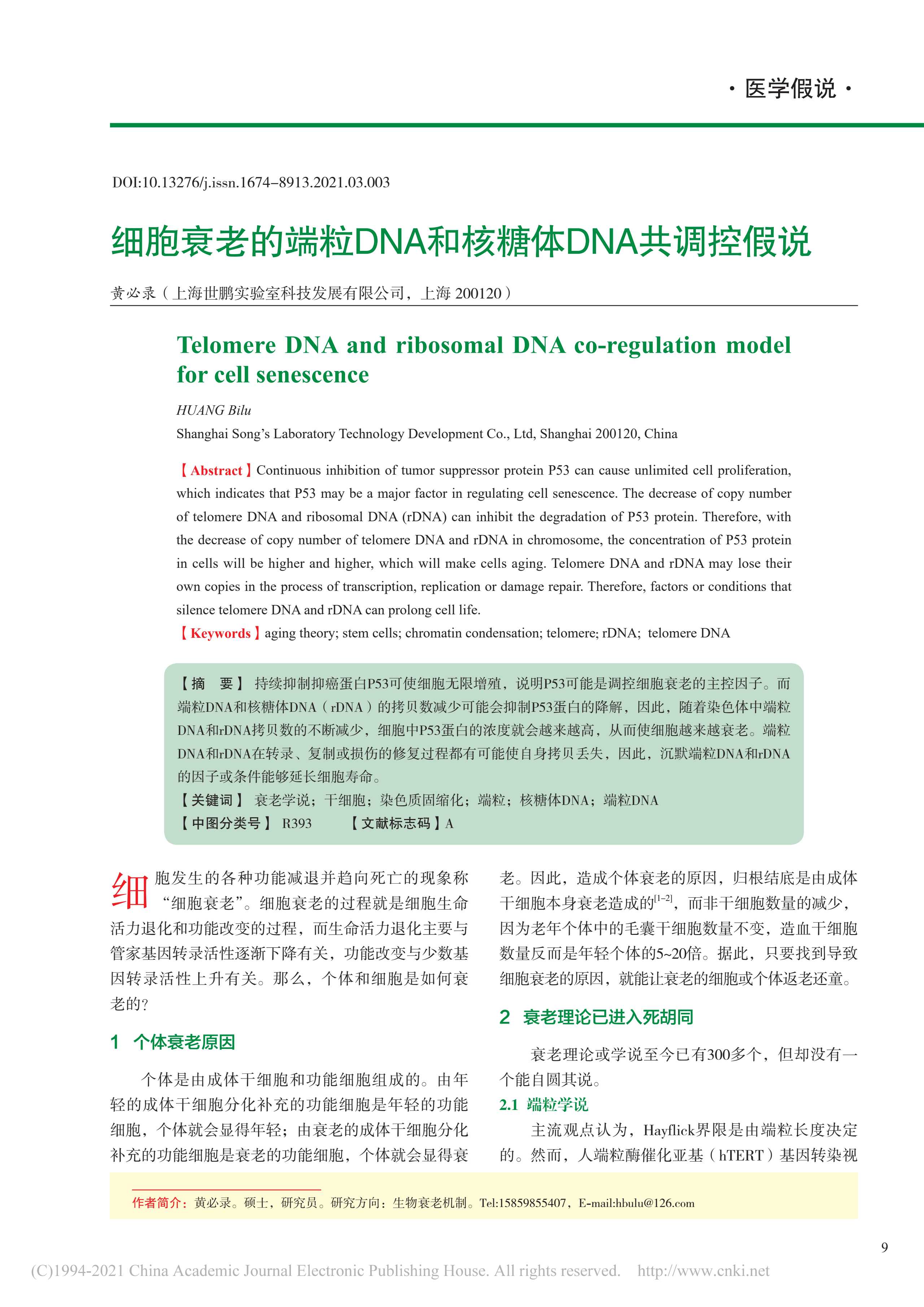
Published "Telomere DNA and ribosomal DNA co-regulation model for cell senescence" in Negative.
Core Conclusion: The fundamental cause of cellular senescence is co-regulated by the shortening of telomere and/or rDNA arrays through p53 pathway. This hypothesis has been experimentally verified, marking the establishment of the core mechanism of the TRCS Model.
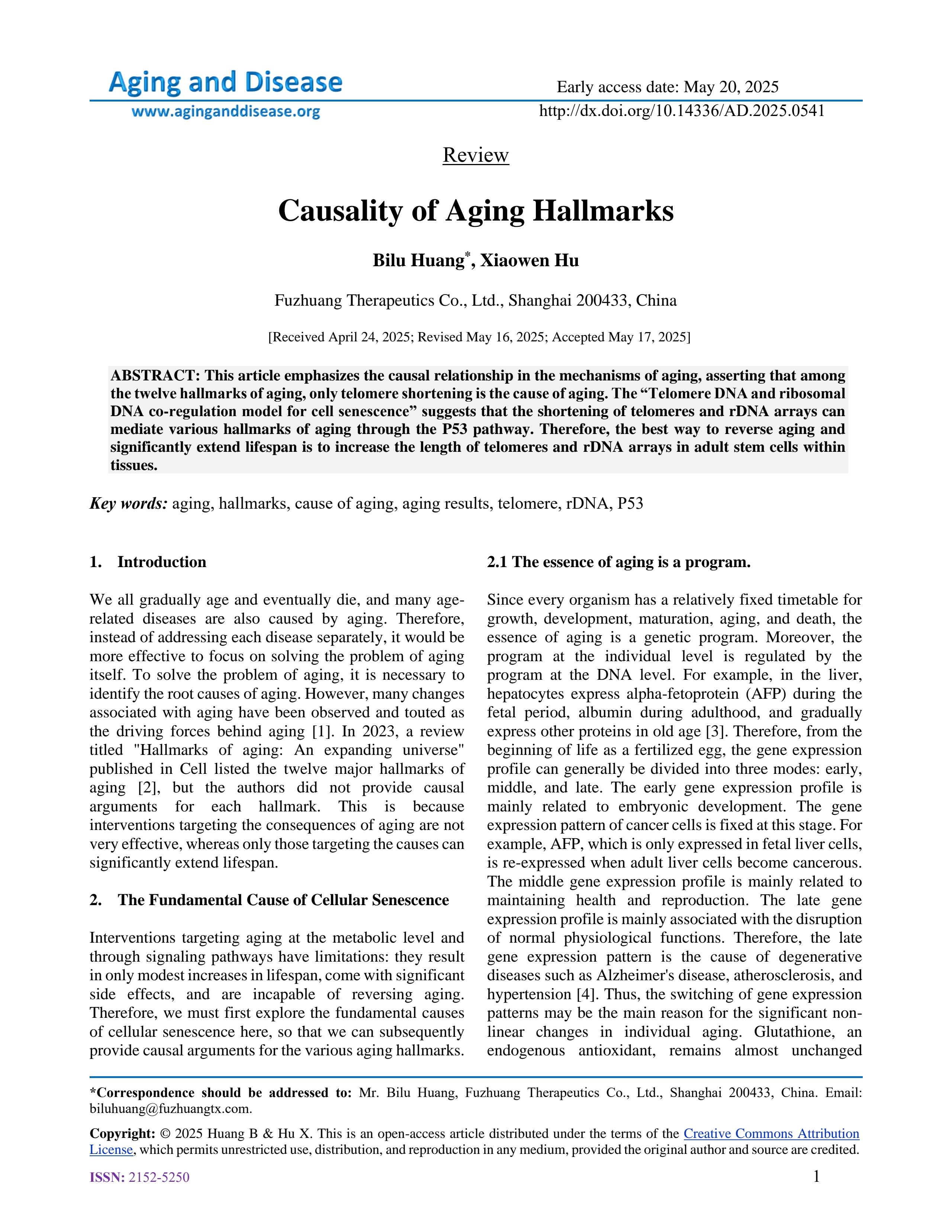
Bilu Huang's team further elucidated the TRCS model and proposed a causal relationship model among the twelve aging hallmarks, providing theoretical support for age reversal research. This systematic review was published in Aging and Disease.
Core Insights: Clearly asserted that the eleven major hallmarks of aging are mediated by telomeres and rDNA shortening through p53.

Competing Interests
To uphold the highest standards of academic integrity and transparency, Bilu Huang hereby publicly discloses any potential conflicts of interest with commercial or academic entities outside this research institute. This information provides essential context for readers and the academic community when evaluating his scientific work. This statement is updated periodically.
Research Funding
The research conducted at the Bilu Huang Institute for Aging Research is primarily supported by Bilu Huang's personal investment. This approach ensures complete independence in research direction and scientific inquiry, free from external influence.
- Personal Investment: Bilu Huang continues to dedicate personal funds to support the institute's core operations and research directions.
Financial Interests
Equity and Ownership:
- Is the founder and a major shareholder of Fuzhuang Therapeutics.
Intellectual Property:
- (Relevant intellectual property generated by the Institute will be disclosed in this section once a clear commercialization pathway is established.)
Non-Financial Interests
Academic Service & Affiliations:
- Is an individual member of the International Longevity Alliance (ILA).
Academic Advocacy & Dissemination:
- Lead creator of ConquerAging.org, a platform under the institute's dissemination department dedicated to advocating for and educating about the TRCS model, longevity and rejuvenation science.
- Publicly shares views on aging research via platforms including his X (Twitter), Substack YouTube Channel, and LinkedIn.
Regarding This Statement
I, Bilu Huang, confirm that the information above is accurate and complete to the best of my knowledge. I am committed to upholding the highest standards of scientific integrity in all my academic communications, publications, and public lectures.
My scientific opinions and research findings are formed first and foremost based on the available evidence and logical reasoning. Notwithstanding the above declared relationships, all research conclusions presented by this Institute are subject to rigorous internal review.
This statement was last updated in: December 2025